
Composite vs Wood Decks in New England: Cost, Maintenance, and Freeze-Thaw Reality
· By Lauderly G. Lima
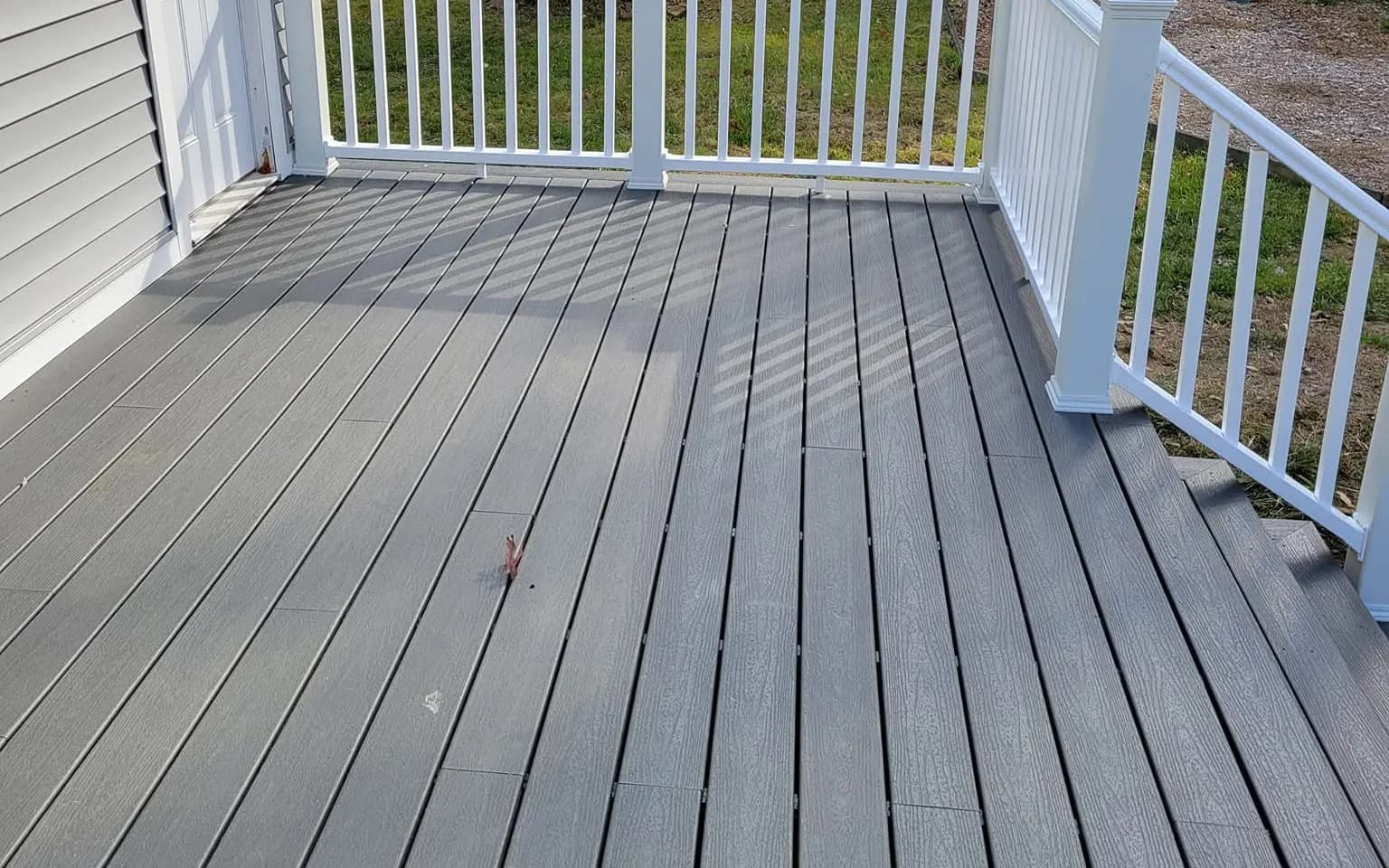
Every deck conversation in New England ends up at the same fork: wood or composite. Pressure-treated lumber is the classic choice and still the most affordable. Cedar looks great and costs more. Composite and PVC decking promise years without staining and cost the most up front. Each one behaves differently once it has spent a few winters under snow, road salt, and freeze-thaw cycles.
This guide compares the main decking materials the way a contractor looks at them in Central Massachusetts: what they typically cost installed, what maintenance really looks like, how they handle our climate, and what does not change no matter which surface you pick, the frame underneath.
The Main Options: Pressure-Treated, Cedar, Composite, and PVC
Pressure-treated pine is lumber that has been chemically treated to resist rot and insects. It is the most common decking in Massachusetts and almost always the material used for the structural frame, even when the surface is composite. It is strong, widely available, and easy to repair.
Cedar is a naturally rot-resistant softwood with a warmer color and less tendency to warp than treated pine. It weathers to silver gray if you leave it alone. Composite decking is made from a blend of wood fibers and plastic, usually with a protective outer shell (capped composite). PVC decking is fully synthetic, lighter, and generally the most resistant to moisture and staining.
Typical Cost Ranges
Prices move with lumber markets, deck height, stairs, railings, and site access, so treat these as rough market ranges rather than a quote. As a general guide, many new pressure-treated decks in Massachusetts land somewhere around $35 to $60 per square foot installed. Cedar typically runs higher. Capped composite decks often fall in the range of $55 to $100 or more per square foot, and premium composite or PVC with upgraded railings can go higher still.
Railings, stairs, and lighting move the number more than most people expect. A ground-level platform with no railing costs far less per square foot than a second-story deck with long stair runs and a composite or aluminum railing system. The only way to know your number is a site visit and a written scope, which is what a free estimate is for.
Maintenance: What You Are Signing Up For
Wood needs attention. A pressure-treated deck should be cleaned and sealed or stained, typically every two to three years depending on sun exposure. Skip it and the boards gray, check, and splinter, and the surface starts holding moisture. Cedar needs similar care if you want to keep its color. Individual boards may cup or twist over time and need to be refastened or replaced.
Composite and PVC skip the staining. Most of the maintenance is a wash in spring and fall to clear pollen, leaves, and mildew, plus keeping debris out of the gaps so water drains. They are not maintenance free: mildew can grow in shady spots, and grease or sunscreen can stain. But the weekend projects mostly disappear.
Over 15 or 20 years, the stain, sealer, and labor on a wood deck add up. That is the main reason composite can come out closer in lifetime cost than the upfront price suggests.
How Each Material Handles New England Winters
Freeze-thaw is the enemy. Water gets into wood fibers and cracks, freezes, expands, and opens those cracks a little more every cycle. Central Massachusetts can see dozens of freeze-thaw swings in a winter. Wood that is sealed and allowed to dry between storms holds up well. Wood that stays wet under a snow pile or in a shady corner is where rot starts.
Capped composite and PVC absorb very little water, so they shrug off freeze-thaw on the surface. They do expand and contract with temperature, which is why manufacturers specify gap spacing at installation. A deck installed with the wrong gaps on a hot July day can show tight seams or buckling by January.
Shoveling is a practical point. Use a plastic shovel on any deck, and avoid rock salt on wood since it is hard on the boards and fasteners. Many composite manufacturers allow calcium chloride ice melt, but check the product's care guide.
Heat, Slip, and Look
Dark composite boards can get hot in direct summer sun, noticeably hotter than wood. If your deck faces south or west with no shade, lighter colors are worth considering. On the other hand, many composite products have an embossed grain that gives decent traction when wet.
On looks, nothing quite matches real wood up close, and cedar especially has a warmth composite only imitates. Modern capped composites have come a long way, though, and on a colonial or cape with matching trim, a well-chosen composite color can look sharp for many years without fading the way an unstained wood deck does.
The Frame Matters More Than the Boards
Whatever surface you choose, the deck is only as good as what holds it up. Footings have to go below the frost line, typically 48 inches deep in much of Central Massachusetts, or frost heave will lift and shift the deck over a few winters. The ledger board attached to the house needs proper flashing and fasteners, since a poorly flashed ledger can rot the house framing behind it.
Composite decking also tends to need joists spaced closer together than wood, especially for diagonal patterns, so a composite deck is not just a board swap. On an older home, we often find an existing deck whose frame is the real problem, with undersized joists or shallow footings. Replacing just the surface boards on a tired frame is money spent in the wrong place.
Which One Is Right for You?
Pick pressure-treated wood if budget is the priority, you do not mind sealing every few years, or you may change the deck in the next decade. Pick cedar if you want real wood with better looks and stability and accept the extra care. Pick composite or PVC if you plan to stay long term, want your weekends back, and are comfortable with the higher upfront cost.
Delane Construction builds and rebuilds decks and porches across Central Massachusetts, with more than 27 years in general contracting. In a BuildZoom review, Chris B. wrote that the finished porch and walkway came out so well that neighbors stopped to admire it. If you are weighing materials for a deck in Leominster or nearby, request a free estimate and we will price the options side by side for your site.
Frequently asked questions
- Is composite decking worth it in New England?
- For many homeowners who plan to stay long term, yes. Capped composite resists moisture and freeze-thaw damage on the surface and skips the staining a wood deck needs every few years. It costs more up front, so the payoff depends on how long you keep the deck.
- How long does a pressure-treated deck last in Massachusetts?
- A well-built, regularly sealed pressure-treated deck often lasts 15 to 20 years or more in Massachusetts. Decks that stay wet, sit in shade, or are never sealed tend to rot sooner, especially at stair stringers and ledger connections.
- How deep do deck footings need to be in Central Massachusetts?
- Footings must go below the frost line, which is typically 48 inches in much of Central Massachusetts. Your local building department sets the requirement and usually inspects footing holes before concrete is poured.
- Can you put composite boards on an existing wood deck frame?
- Sometimes. The frame has to be structurally sound, and joists often need to be closer together for composite than for wood. If the existing frame is old, undersized, or has shallow footings, it usually makes more sense to rebuild the frame first.
- Can I use ice melt on a composite deck?
- Many composite manufacturers allow calcium chloride ice melt and plastic shovels, but rules vary by product, so check the care guide. On wood decks, avoid rock salt, which is hard on the boards and fasteners.
Related services
Found this helpful? Make us a preferred source on Google.
Ready for an exact price?
Get a free, no-pressure in-home estimate. Real numbers for your home, not a phone guess.